
Organizer: Assoc. Prof. Xinyue Chang, Taiyuan University of Technology, China
 She is associate professor and doctoral supervisor at Taiyuan University of Technology. She serves as the Deputy Director of the Key Laboratory of Cleaner Intelligent Control on Coal & Electricity, Ministry of Education. She is a Youth Editorial Board member for several SCI/EI-indexed or core journals, including iEnergy and China Electric Power. Her research primarily focuses on the planning and operation of clean energy systems in polar regions. She has published over 40 academic papers, applied for more than 30 patents, and has undertaken or participated in more than 10 research projects, including the National Natural Science Foundation of China Youth Program, Shanxi Provincial Key Research and Development Projects.
Invited Speaker: Assoc. Prof. Jiahe Xu, University of Electronics Science and Technology of China, China
 Jiahe Xu is currently an associate professor and master's supervisor with Taiyuan University of Technology. He got M.Eng. degree in System Engineering from Cornell University and Ph.D. degree in Electrical Engineering from Tsinghua University. He has published over 10 papers in prestigious academic journals such as Communications Engineering (Nature's first engineering sub-journal), Applied Energy, and Proceeding of the CSEE. He is member of the Ministry of Natural Resources Science and Technology Innovation Team and the China Energy Research Society, and has won the prize at the Geneva International Exhibition of Inventions. His research interests include polar clean energy technology, body grid and new energy storage.
Invited Speaker: Assoc. Prof. Chuanshen Wu, Hohai University, China
 Chuanshen Wu, Ph.D., is an associate researcher with the School of Electrical and Power Engineering at Hohai University. His research interests focus on electric vehicle–grid interaction. In recent years, he has published more than 30 papers in leading journals in this field. He has served as the PI of a project supported by the Young Scientists Fund of the NSFC and has served multiple times as a Guest Editor or organizer of international journal special issues.
Invited Speaker: Assoc. Prof. Jianguo Zhou, Jinan University, China
 Jinguo Zhou received the B.S. degree in automation and the M.S. and Ph.D. degrees in control theory and control engineering from Northeastern University, Shenyang, China, in 2011, 2013, and 2018, respectively. From 2018 to 2020, he was a Postdoctoral Researcher with Tsinghua Berkeley Shenzhen Institute, Tsinghua University, China. From 2021 to 2025, he worked as a Research Scientist at Tsinghua Shenzhen International Graduate School. Since July 2025, he has joined the International Energy College, Jinan University, where he is currently an associated professor. His research interests include optimization and control of renewable energy dominated power systems.
Invited Speaker: Dr. Dongliang Xu, Nanjing Normal University, China
 Dongliang Xu received his B.S degree in Electrical Engineering from Nanjing Normal University in 2019 and his Ph.D. degree in the same field from Southeast University in 2024. Now he is an Associate Researcher at the School of Electrical and Automation Engineering of Nanjing Normal University. His research interests include distribution network state estimation and Cyber physics System.
Invited Speaker: Dr. Xuan Wei, North China Electric Power University, China
 Wei Xuan is currently a lecturer at North China Electric Power University. She received her Bachelor's, Master's, and Ph.D. degrees from North China Electric Power University and Tsinghua University, respectively. Her research focuses on virtual power plants, data centers, and electricity markets. She has led five research projects, including a National Natural Science Foundation Youth Program and a sub-project of the National Key R&D Program “Smart Grid 2030.” She has published over 20 papers in prestigious academic journals such as IEEE TSG and holds eight authorized invention patents. She has been invited to serve as a Guest Editor for the special issue on "Electricity-Computing Synergy" in IEEE Transactions on Industry Applications.
Invited Speaker: Dr. Qiong Liu, The Chinese University of Hong Kong, Hong Kong, China
 Qiong Liu is currently a Research Associate at The Chinese University of Hong Kong. He received his Ph.D. in Electrical Engineering from Tsinghua University and was a visiting student at the University of California, Berkeley. He previously served as a Postdoctoral Research Associate at the University of Exeter, UK. He possesses extensive research experience spanning China and the UK, participating in prestigious projects such as the National Key R&D Program of China and the UK’s ARIA project. His research interests focus on learning-based smart grid operations. He has published and serves as a reviewer in high-impact journals including several IEEE Transactions journals and Applied Energy.
Invited Speaker: Dr. Peishuai Li, Nanjing University of Science and Technology, China
 Peishuai Li is currently a lecturer with the School of Automation at Nanjing University of Science and Technology. He received his Ph.D. in Electrical Engineering from Southeast University and was a visiting student at the New South Wales University, Australia. His research interests focus on the operation and control of active distribution networks, as well as multi-stakeholder transaction game theory. He has published over 30 high-level publications. Serving as the first instructor, he has won the National Gold Award at the “2025 China International College Students Innovation Competition” and he has been recognized with the first prize of Jiangsu province science and technology progress award and the second prize of Jiangxi province science and technology progress award.
Invited Speaker: Dr. Yi Zhang, Nanjing Institute of Technology, China
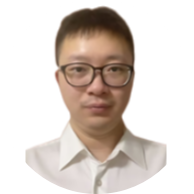 Yi Zhang received his B.S degree and M.S in Electrical Engineering from Chongqing University in 2016 and 2019. Then, he achieved his Ph.D. degree in the same field from Southeast University in 2024. Now he is a Lecturer at Nanjing Institute of Technology School of Electric Power engineering, School of Shenguorong. His research interests include evaluation of cable insulation material aging and online monitoring of faults.
Invited Speaker: Dr. Linwei Sang, Southeast University, China
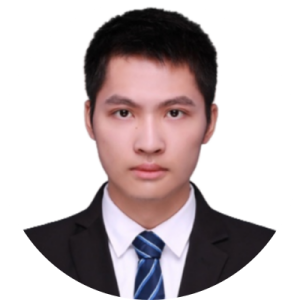 Linwei Sang is an Associate Professor and Master’s Supervisor at the School of Electrical Engineering, Southeast University. His research focuses on AI-enabled power system operation and control. He received the B.Eng. and M.Eng. degrees from Southeast University and the Ph.D. degree from Tsinghua University. He was a visiting scholar at UC Berkeley under Prof. Shmuel S. Oren and a research intern at Alibaba DAMO Academy. He has published multiple IEEE Transactions papers, led an NSFC project, and received the IEEE PES Prize Paper Award.
Invited Speaker: Dr. Mingyang Zhang, North China Electric Power University, China
 Mingyang Zhang received his B.S and M.S. degree in Electrical Engineering from North China Electric Power University (NCEPU) in 2019 and 2022, respectively. He received his Ph.D. degree in Electrical Engineering from Tsinghua University in 2025. Now he is a Lecturer at the School of Electrical and Electronic Engineering of NCEPU. His research interests focus on extreme weather and distribution system operation. He has published more than 14 academic papers and served as a reviewer in high-impact journals including IEEE Trans., IEEE things of Internet and Applied energy.