
Organizer: Assoc. Prof. Shilin Gao, Sichuan University, China
 Shilin Gao (Member, IEEE) received the B.S. and M.S. degrees in electrical engineering from Shandong University, Jinan, China, in 2017 and 2019, respectively, and the Ph.D. degree in electrical engineering from the Department of Electrical Engineering, Tsinghua University, Beijing, China, in 2023. He is currently an Associate Professor with the College of Electrical Engineering, Sichuan University, China. His research interests include power system electromagnetic transient simulation, power system stability analysis and control, and renewable energy.
Invited Speaker: Prof. Hang Shuai, Huazhong University of Science and Technology (HUST), China
 Hang Shuai (Member, IEEE) received the Ph.D. degree in electrical engineering from the Huazhong University of Science and Technology (HUST), Wuhan, in 2019. He was a Visiting Student Researcher with the University of Rhode Island (URI), Kingston, RI, USA, from 2018 to 2019. He was also a Postdoctoral Researcher with the URI and University of Tennessee (UT), Knoxville, TN, USA, from 2019 to 2023. He was a Research Assistant Professor with the UT and Clemson University, Charleston, SC, USA, from 2023 to 2025. Currently, he is a Professor with the School of Electrical and Electronics Engineering, HUST, Wuhan, China. His research interests include machine learning for power system optimization and control, and bulk power system resilience.
Invited Speaker: Prof. Can Huang, Southeast University, China
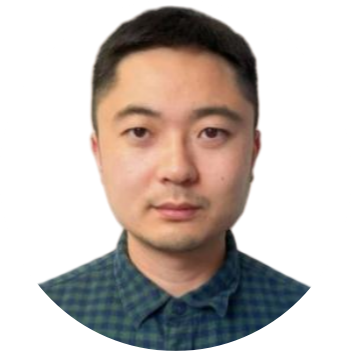 CAN HUANG received the Ph.D. degree in electrical engineering from the University of Tennessee, Knoxville, TN, USA. He is currently a Research Staff with the Southeast University, Nanjing, China, CA. His research interests include virtual power plants, power system planning and operation under extreme events, and power system monitoring and control.
Invited Speaker: Dr. Gang Huang, Zhejiang University, China
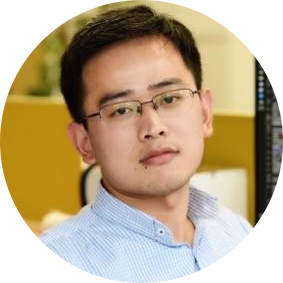 Dr. Gang Huang received the Ph.D. degree in electrical engineering from Zhejiang University, Hangzhou, Zhejiang, China, in 2018. During 2015–2016, he was with Argonne National Laboratory, Argonne, IL, USA. He is currently an assistant professor with the College of Electrical Engineering, Zhejiang University. Prior to this, he served as a senior researcher at Zhejiang Lab. His primary research interests revolve around artificial intelligence for power and energy systems. He is a senior member of IEEE, the China Computer Federation (CCF), and the Chinese Society for Electrical Engineering (CSEE).
His research has been supported by the National Natural Science Foundation of China, the Smart Grid-National Science and Technology Major Project, and the Ministry of Industry and Information Technology, among others. He has published over 60 papers, holds more than 20 invention patents and three software copyrights, and actively serves the academic community. He is a founding editorial board member of Digital Twins and Applications, an Associate Editor of Protection and Control of Modern Power Systems, a Youth Editorial Board Member of Power System Protection and Control and China Electric Power, and a Guest Editor for special issues of Electric Power Automation Equipment and Electric Power Construction.
Invited Speaker: Dr. Tannan Xiao, Tsinghua University, China
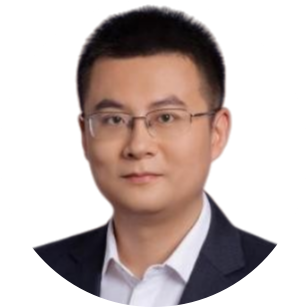 Tannan Xiao serves as an Assistant Research Fellow at the State Key Laboratory of Power System Operation and Control, Tsinghua University. His research endeavors have been consistently focused on power system simulation, artificial intelligence, and digital twin technologies. He has served as the Principal Investigator for one project funded by the National Natural Science Foundation of China and two projects supported by the China Postdoctoral Science Foundation. Additionally, he undertakes two sub-projects under the National Key Research and Development Program and National Major Projects. His scholarly contributions encompass over 30 publications indexed in SCI/EI databases and more than 60 invention patent applications. His research achievements have garnered significant recognition, including the Best Paper Award at the 2021 IEEE Power & Energy Society General Meeting, the Outstanding Paper Award from the China Simulation Federation in 2022, and the First Prize of the Science and Technology Award from the China Simulation Federation in 2023.
Invited Speaker: Assoc. Prof. Gao Qiu, Sichuan University, China
 Dr. Gao Qiu has long been engaged in research on artificial intelligence applications in power systems, focusing on system stability control and operational optimization. He has led several projects, including one funded by the National Natural Science Foundation of China (NSFC), one by the Sichuan Provincial Natural Science Foundation, and one by the Ningxia Natural Science Foundation. He also served as a sub-project leader in two National Key R&D Programs and participated as a core researcher in two additional NSFC projects and another National Key R&D Program. He received the CES Excellent Doctoral Dissertation Nomination Award and the Second Prize of the Fujian Electric Power Science and Technology Award (2022). He has published over 30 SCI/EI-indexed papers and received the 2025 IEEE PES Technical Committee Best Paper Award and the 2024 HKSME Best Paper Award.
Invited Speaker: Assoc. Prof. Zongsheng Zheng, Sichuan University, China
 Zongsheng Zheng is an associate professor and master’s supervisor at Sichuan University, and a visiting scholar at Virginia Tech in the United States. His primary research interests include power system stability and control, high-voltage direct current (HVDC) transmission, grid integration of renewable energy, and new artificial intelligence technologies and their applications. He has led one National Natural Science Foundation Youth Science Fund project, participated in one national key research and development program and one National Science and Technology Innovation 2030 Major Project, and has been responsible for seven industry-sponsored projects. He has published over 40 papers in internationally renowned journals and holds more than 10 authorized invention patents.
Invited Speaker: Assoc. Prof. Peng Yang, Xi'an Polytechnic University, China
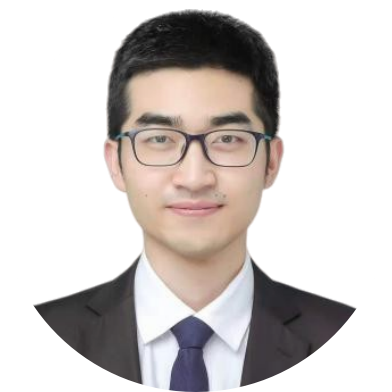 Peng Yang received the B.Sc. degree in electrical engineering, the B.Sc. degree in applied mathematics, and the Ph.D. degree in electrical engineering from Tsinghua University, Beijing, China, in 2017, 2018, and 2022, respectively. He is currently an Associate Professor with the School of Electronics and Information, Xi'an Polytechnic University. His research interests include power system stability analysis and control. Dr. Yang is the winner of the 2020 Zhang Si Ying (CCDC) Outstanding Young Paper Award. He is also the recipient of the 2018–2020 Best Paper Award of IEEE Transactions on Power Systems.
Invited Speaker: Assoc. Prof. Yifan Su, Chongqing University, China
 Yifan Su received the B.Sc. and Ph.D. degrees in electrical engineering from Tsinghua University, Beijing, China, in 2019 and 2024, respectively. He is currently an Associate Professor with the School of Electrical Engineering at Chongqing University, Chongqing, China. His research interests include operation and reliability of distributed energy resources, dispatch and control in renewable-dominated power systems, and game-theory-based decision making.