
<style type="text/css">.wpb_animate_when_almost_visible{opacity:1}</style>

Session 6: Superconducting Electrical Technologies for Future Power and Energy Systems

“面向未来电力与能源系统的超导电气技术”

Session 6

Superconducting Electrical Technologies for Future Power and Energy Systems
“面向未来电力与能源系统的超导电气技术”

With the deepening implementation of the dual-carbon goals and the accelerated construction of new power systems, the power and energy industry is facing ever-increasing demands for higher efficiency, safety, reliability and compactness. Superconducting technology, as a disruptive enabling technology, provides fundamentally new possibilities, including zero-resistance current carrying, ultra-high magnetic fields and extremely high power density. High-temperature superconductors (HTS), such as REBCO coated conductors and Bi-2212 wires, have achieved remarkable progress in both performance improvement and cost reduction, which strongly promotes the development of superconducting electrical equipment, including superconducting motors and generators, superconducting magnetic energy storage, superconducting fault current limiters, superconducting power cables, and large-scale high-field magnets for magnetic confinement fusion.
However, the engineering application of superconducting electrical equipment still faces many key challenges: design and fabrication of large-scale HTS conductors and magnets, reduction and accurate measurement of AC losses under complex operating conditions, quench detection and protection, cryogenic engineering and insulation, as well as reliability and life-cycle assessment. Moreover, the deep integration of superconducting technology with renewable energy systems, energy storage and artificial-intelligence-based design methods is becoming a new frontier.
This special session aims to bring together researchers and engineers from universities, research institutes and industry to share the latest theoretical advances, engineering practices and technological breakthroughs in superconducting electrical applications. Topics of interest include but are not limited to HTS materials and conductors, high-field magnets, superconducting motors and energy storage devices, AC loss modeling and measurement, quench protection, cryogenic and insulation technologies, AI-driven design, and the integration of superconducting equipment into future power and energy systems. Original research papers and comprehensive review articles are both welcome.

随着“双碳”目标的深入推进与新型电力系统建设的加速,电力与能源行业对装备的效率、可靠性和紧凑性提出了越来越高的要求。超导技术作为变革性使能技术,为零电阻载流、超高磁场与极高功率密度提供了全新的可能。以REBCO涂层导体、Bi-2212线材为代表的高温超导材料在性能提升与成本下降两方面均取得进展,有力推动了超导电机与发电机、超导储能、超导故障限流器、超导电缆,以及磁约束聚变高场磁体等超导电气装备的快速发展。
然而,超导电气装备的工程化应用仍面临诸多关键挑战:大型高温超导导体与磁体的设计与制造、复杂工况下交流损耗的抑制与精确测量、失超检测与保护、低温工程与绝缘技术,以及可靠性与寿命评估等。同时,超导技术与新能源系统、储能技术及人工智能设计方法的深度融合正成为新的前沿方向。
本次专题征稿围绕超导电气技术的“材料-装备-系统-应用”全链条展开,覆盖电气装备、高电压技术、电力电子、电力系统、新能源、智能方法等多个领域,征稿主题包括但不限于:

Topics (Including but not limited to)

  • 1. Performance optimization of high-temperature superconducting materials and engineering fabrication technology of superconducting conductors;
    高温超导材料性能优化与导体制备工程化技术
  • 2. Design, testing and integration technology of superconducting motors and superconducting power equipment;
    超导电机与超导电力装备设计、测试及集成技术
  • 3. Topology integration and coordinated control technology of superconducting devices and power electronics;
    超导器件与电力电子拓扑集成及协同控制技术
  • 4. Insulation characteristics in cryogenic environment and quench protection technology for superconducting equipment;
    低温环境绝缘特性与超导装备失超保护技术
  • 5. Modeling, accurate measurement and mitigation technology of AC loss in superconducting equipment;
    超导装备交流损耗建模、精准测量与抑制技术
  • 6. Planning, operation and regulation technology of AC/DC power grids with superconducting equipment;
    含超导装备的交直流电网规划与运行调控技术
  • 7. Superconducting magnetic energy storage (SMES) and renewable energy grid integration & system support technology;
    超导储能与新能源并网消纳及系统支撑技术
  • 8. Condition monitoring, fault diagnosis and life assessment technology for superconducting electrical equipment;
    超导电气装备状态监测、故障诊断与寿命评估技术
  • 9. Application of artificial intelligence in design and operation optimization of superconducting equipment;
    人工智能在超导装备设计与运行优化中的应用技术
  • 10. Application of superconducting technology in new power systems and integrated energy systems.
    超导技术在新型电力系统与综合能源中的应用技术

Chair: Dr. Shuyang Gao, Guang'an Institute of Technology, China
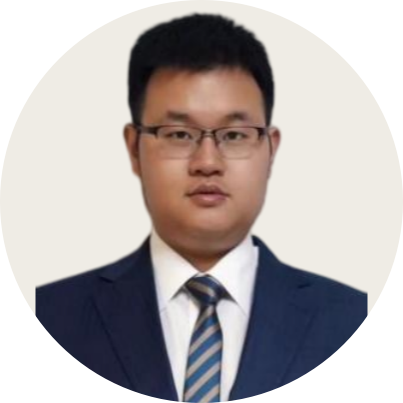
Shuyang Gao received his B.S., M.S., and Ph.D. degrees from Southwest Jiaotong University, Chengdu, China, in 2016, 2021, and 2025, respectively; his Ph.D. was in Electrical Engineering, focusing on electromagnetic levitation and superconducting engineering. He is currently a faculty member and the Team Lead of the Superconducting Power Application Group at the Advanced Superconducting Materials and Power Applications Key Laboratory of Sichuan Province, Guang'an Institute of Technology, Guang'an, China. His research interests include superconducting electrical applications, such as superconducting motors, high-temperature superconducting (HTS) fusion magnets, and superconducting magnetic energy storage (SMES) and hybrid energy storage systems integrated with electrochemical energy storage. He has published in reputable journals, including Superconductor Science and Technology, and has participated in several national key R&D programs on magnetic-confinement fusion energy.


Co-chair: Dr. Jiangpeng Yang, Tsinghua University, China
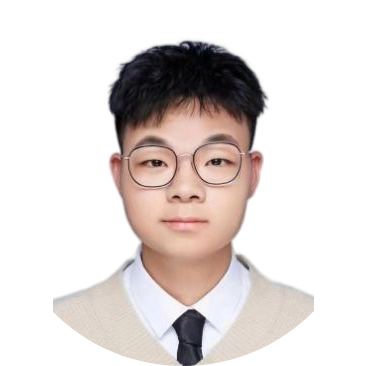
Jiangpeng Yang received the B.S. degree in electrical engineering and automation from Shenyang University of Technology, Shenyang, China, in 2019, and the Ph.D. degree in electrical engineering from Southwest Jiaotong University, Chengdu, China, in 2025. He is currently a Postdoctoral Fellow at Tsinghua Shenzhen International Graduate School, Tsinghua University, Shenzhen, China. His research interests include the control techniques of the dual active bridge converter and multi-level converters, and the topology derivation techniques of AC-DC and DC-AC converters.


Co-chair: Prof. Min Zhang, China West Normal University, China

Min Zhang received her Ph.D. degree from Southwest Jiaotong University, Chengdu, China. She is currently a Professor at the College of Physics and Astronomy, China West Normal University. She is a distinguished teacher of China West Normal University. Her research focuses on the design and development of functional materials including superconducting materials and related devices, covering single-crystal preparation, electromagnetic transport properties, topological materials, spin-electronic and optoelectronic materials as well as bipolar detectors. She has presided over one National Natural Science Foundation Youth Project and multiple provincial and departmental research projects. She has published more than 30 SCI papers as the first or corresponding author in journals such as ACS Applied Materials & Interfaces and Journal of Alloys and Compounds, and holds a number of authorized invention and utility model patents. She also undertakes teaching construction and serves as an expert in local industrial talent alliance.


Co-chair: Assoc. Prof. Gang Wang, Chengdu University of Information Technology, China
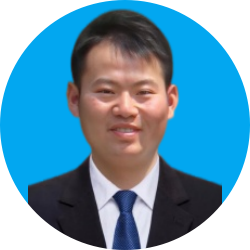
Gang Wang received his Ph.D. degree in Electrical Engineering. He is currently an Associate Professor at the School of Automation, Chengdu University of Information Technology, Chengdu, Sichuan, China. His research interests cover low-carbon power systems, power grid security and stability, and superconducting power applications. He participated in the ITER fusion project, several national MOST projects and NSFC projects. He has published more than 10 academic papers in reputable journals including Applied Energy and Energy, and holds a number of authorized patents. He served as a conference secretary and reviewer for international conferences and journals. He teaches courses including Power System Analysis, High Voltage Technology, Smart Grid and Power Electronics.


Co-chair: Assoc. Prof. Yunpeng Zhu, Southwestern Institute of Physics, China
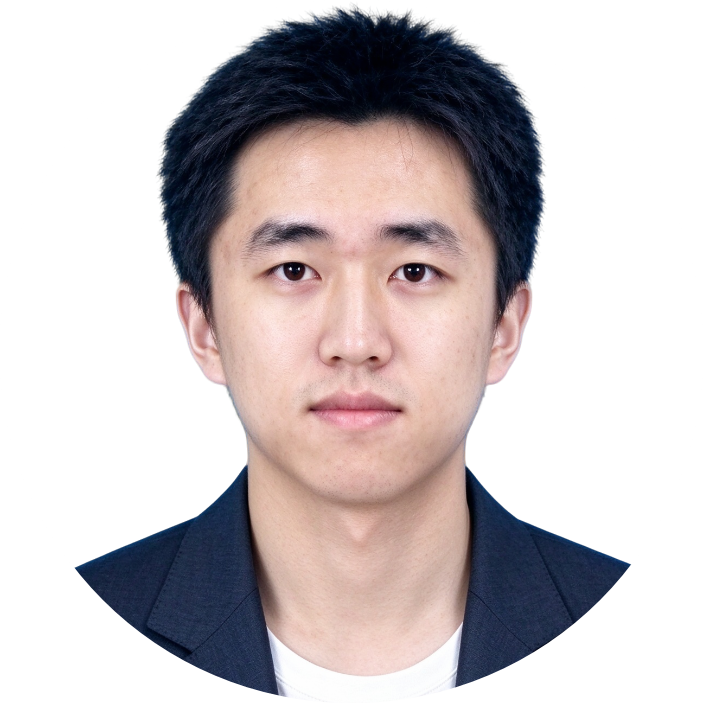
Yunpeng Zhu is currently an Associate Professor at the Southwestern Institute of Physics (SWIP), Chengdu, China. His research focuses on high-temperature superconducting (HTS) conductors, cables and magnets for fusion energy, covering the electromagnetic, thermal and mechanical behaviours of Bi-2223 and REBCO stacked-tape cables, AC loss, quench propagation, joint resistance and current redistribution, as well as AI-assisted modelling of HTS cables and joints. He has been involved in fusion magnet research and development for ITER-related programmes, and has published in journals such as Superconductor Science and Technology and IEEE Transactions on Applied Superconductivity. He holds a number of authorized patents on superconducting magnet protection and fusion device components, and serves as a reviewer for international journals in applied superconductivity.

Call for Papers Timeline / 征稿时间

  • Submission of Full Paper: November 30th, 2026
    投稿截止日: 2026年11月30日 

  • Notification Deadline: December 30th, 2026
    通知书发送: 2026年12月30日 

  • Registration Deadline: January 20th, 2027
    注册截止日期: 2027年1月20日